Building a Living Neighbourhood from a Raw Structure
For this campaign, the brief required a relatable, middle-class residential ecosystem — not a
polished villa society, but a lived-in, emotionally warm neighbourhood.
What existed initially was a raw structural base.
What we built was a functioning micro-world.
⸻
1. The Street as a Character
Instead of treating the location as a backdrop, the entire street was designed as an active
narrative layer.
We constructed:
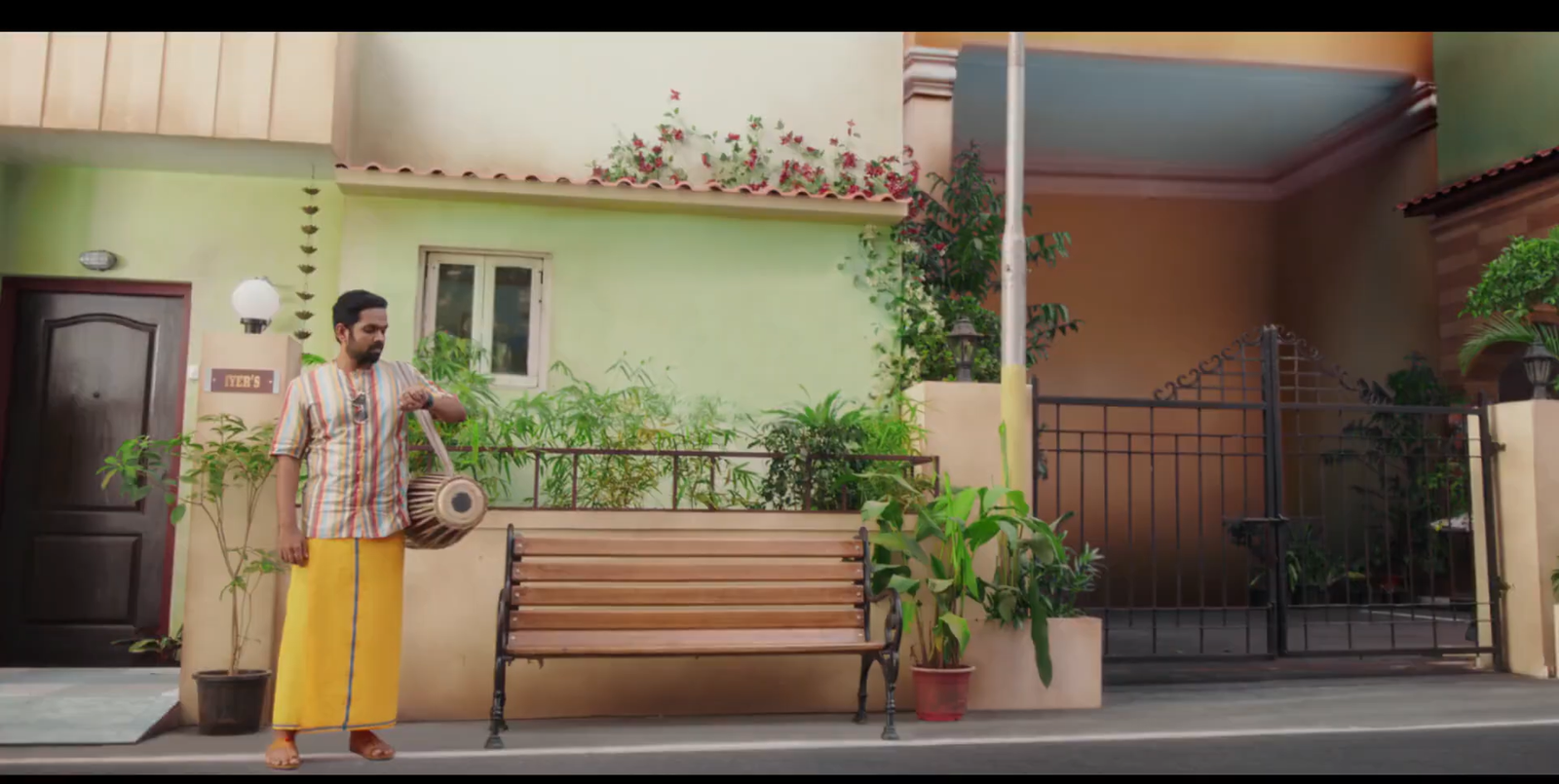
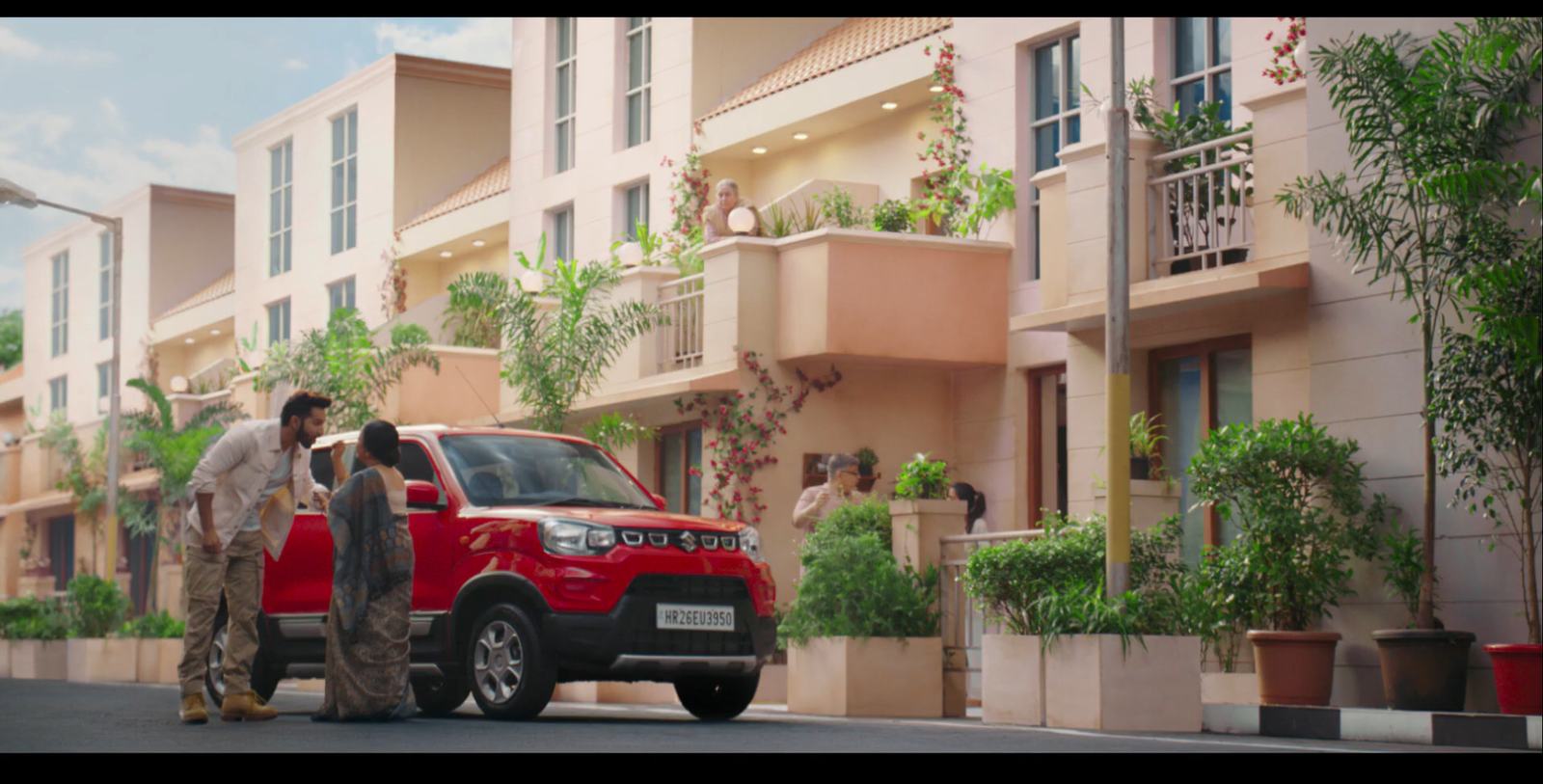
• Repetitive residential façades with varied balcony detailing
• Compound walls, gates, grills, and functional doors
• Realistic potted plantations and creepers to soften geometry
• Streetlights, benches, signage, and name plates
• Curved road layout to create cinematic depth
The intention was to create a street that felt lived-in, not designed.
The asymmetry in plants, balcony clutter, and façade colour variations ensured
authenticity.
⸻
2. Architectural Language
The houses were designed to feel aspirational yet grounded.
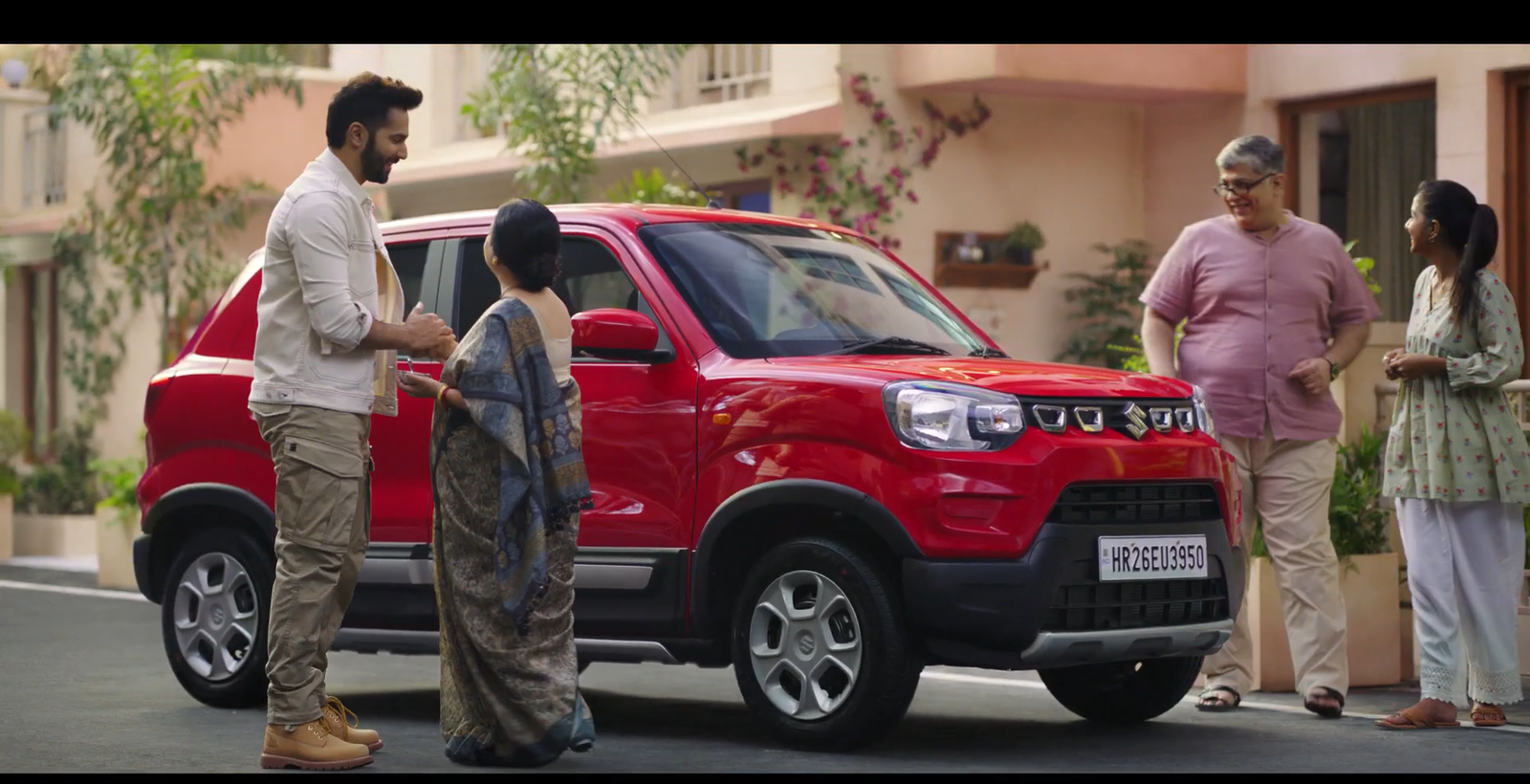
Soft pastel palettes (peach, mint, beige) were used to reflect warmth and accessibility.
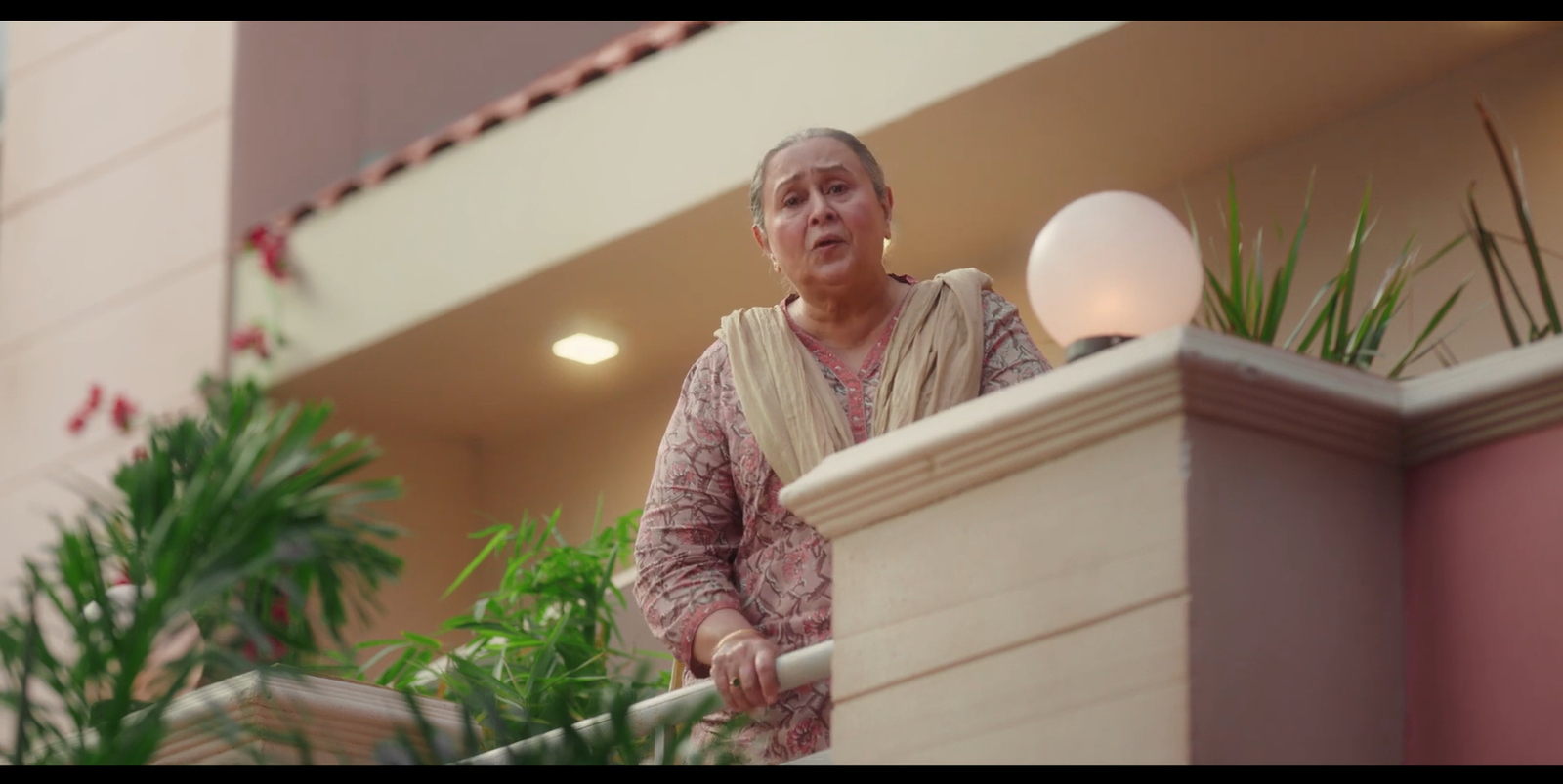
Balconies were layered with railing details and foliage to avoid flatness on camera.
The façades were detailed enough for close shots but modular enough for production efficiency.
This balance was key.
⸻
3. Living Room Interior
The interior space carried emotional warmth.
Muted wall tones, family photographs, layered lighting, and fabric textures were introduced to
communicate familiarity.
Unlike stylised commercial interiors, this one was intentionally imperfect:
• Slightly crowded furniture placement
• Everyday décor pieces
• Warm practical lighting
The design philosophy here was comfort over glamour.
4. Auditorium Exterior & Interior
The auditorium was built to feel institutional and aspirational.
Exterior:
• Symmetrical columns
• Glass façade panels
• Entry signage
• Queue management elements (ropes, posters)
Interior:
• Stage depth designed for camera movement
• Controlled lighting contrast
• Structured seating arrangement
The transition from neighbourhood street to auditorium reinforces the character’s
movement from personal space into public recognition.
⸻
5. Spatial Planning for Vehicle Movement
Since the vehicle is central to the narrative, streets were designed with:
• Practical turning radii
• Layered foreground and background depth
• Controlled greenery to frame moving shots
• Clean asphalt textures for reflective highlights
The street layout allowed dynamic tracking shots without exposing the artificiality of
the set.
The illusion of scale was achieved through forced perspective and façade repetition.
⸻
Core Production Thought
This project was about creating a believable ecosystem from raw construction.
The challenge was not luxury — it was authenticity.
Every element was placed to feel habitual:
• A musician waiting near a bench
• Neighbours leaning from balconies
• Children gathering near gates
• Potted plants breaking façade symmetry
The space needed to feel like it had existed before the camera arrived.